
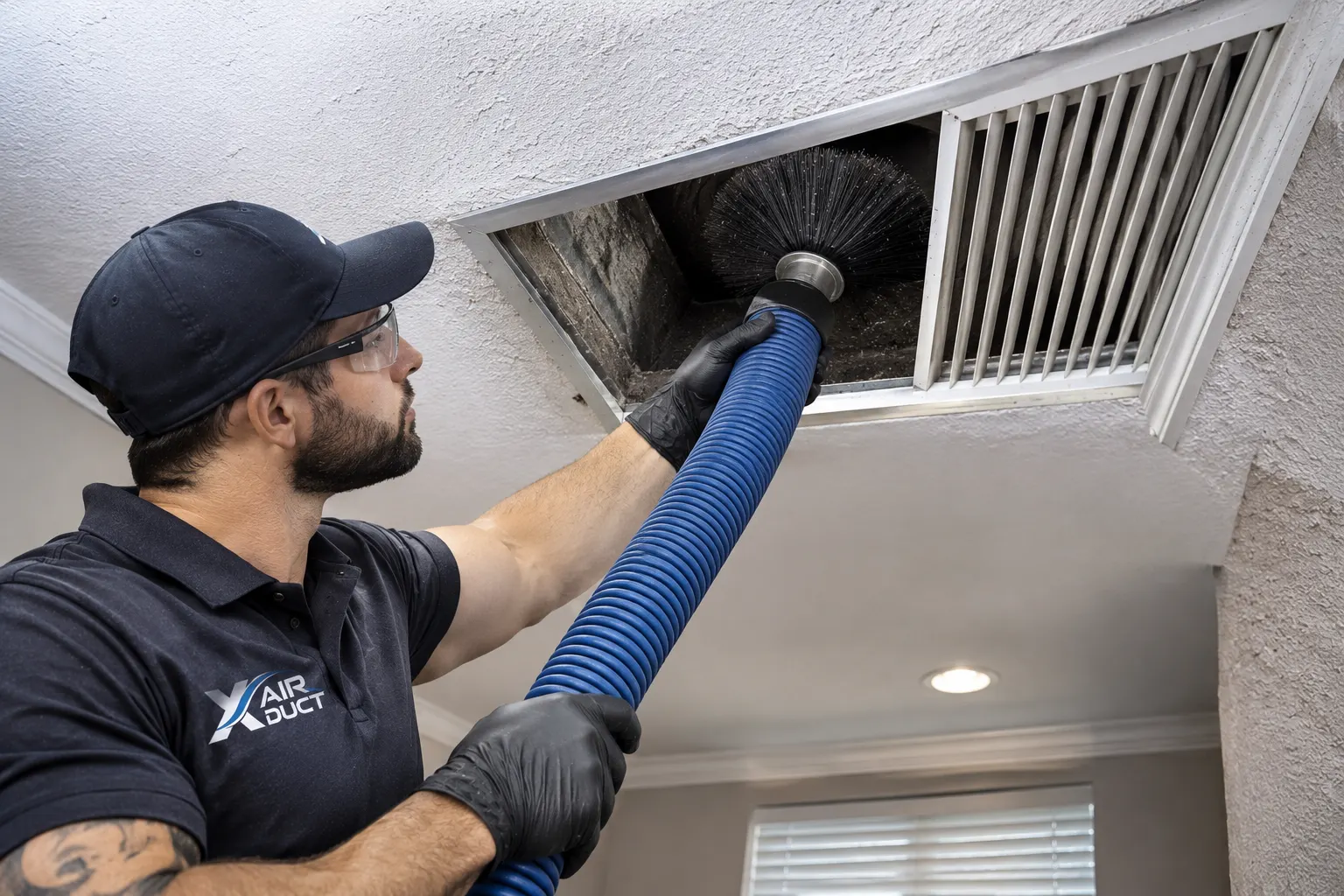
Professional Air Duct Cleaning in South Florida
Breathe cleaner.
Live better.
Professional Air Duct & Dryer Vent Cleaning for South Florida Homes and Businesses.
With 18 years of hands-on industry experience, X Air Duct delivers professional ventilation cleaning services designed to address dust accumulation, lint buildup, and airflow restrictions. We help homeowners and business owners better understand and maintain their ventilation systems through careful service and practical recommendations.
18 Yearsof Industry Experience
Residential& Commercial Services
ProfessionalCleaning Equipment
ServingSouth Florida
Informational statements about our business, not awards or certifications.
57 cities · 3 counties
Our principle
Look first. Clean when the system actually needs it.
Welcome to X Air Duct
South Florida Air Duct Cleaning Backed by Experience
Every forced-air system works the same basic way. A return grille draws room air through a filter to the air handler, where it is cooled and dehumidified, then supply ducts carry it back out to registers in each room. In a South Florida home or office, that loop runs for most of the year, moving enormous volumes of air through ductwork that most people never see.
Over time, some systems collect significant dust, construction debris, or other buildup inside those ducts. When that happens, professional inspection and cleaning can be useful. When it has not happened, cleaning is not needed, and we will tell you so. That as-needed principle is consistent with guidance from the U.S. Environmental Protection Agency.
X Air Duct serves homeowners, condominium owners, and commercial property managers across Broward County, Miami-Dade County, and Palm Beach County. Our approach is built on careful workmanship, close attention to the actual condition of each system, and clear communication about what we find, what we cleaned, and what we could not reach.
18
Years of hands-on industry experience, owner-provided
Experience matters
18 Years of Hands-On Industry Experience
No two ventilation systems are laid out the same way. A single-story ranch home with a garage air handler and short attic runs behaves differently from a two-story house with an upstairs laundry room, and both are different again from a high-rise condominium where ducts hide inside soffits and the dryer exhausts into a long horizontal run.
Experience shows up in the decisions around the cleaning: recognizing which duct material is behind a register, choosing tools that will not tear a flexible liner, spotting a crushed dryer transition before it becomes a bigger problem, and knowing when something belongs to an HVAC contractor or installer instead.
It also shows up in respect for the property. Protecting floors, routing hoses safely, keeping occupants informed, and leaving the space as we found it are habits built over years in homes, condominiums, and commercial spaces with difficult-to-access connections.
Our professional services
Six focused services. Nothing we are not set up to do.
We concentrate on air ducts and dryer vents: cleaning them, and inspecting them so you know whether cleaning makes sense.
- 01
Air Duct Cleaning
Removal of accumulated dust and debris from accessible supply and return ductwork, registers, and grilles when an inspection shows buildup worth addressing.
- 02
Dryer Vent Cleaning
Clearing lint from the exhaust duct between the dryer and the exterior termination, so heated, moist air can leave the building as designed.
- 03
Residential Duct Cleaning
Duct cleaning planned around how families actually live in a home: pets, furniture, schedules, and the specific layout of a house or condo.
- 04
Commercial Duct Cleaning
Duct cleaning for offices, retail, and other commercial spaces, coordinated with property managers around occupants, access, and building rules.
- 05
Air Duct Inspection
A look at accessible ductwork, registers, and returns to understand condition before deciding whether cleaning makes sense.
- 06
Dryer Vent Inspection
Checking the dryer exhaust path from transition hose to exterior hood for lint buildup, routing concerns, and visible problems.
Understanding your system
The Importance of Ventilation Maintenance
Balanced, practical information so you can make your own decisions.
How dust accumulates
Dust enters on the return side: around filters that do not seat tightly, through gaps in return plenums, and through open registers during renovation. Most of it is ordinary household dust. Light accumulation is normal and does not by itself mean cleaning is needed.
Filters versus duct cleaning
A properly fitted filter, changed on schedule, limits how much dust reaches the system and is the most valuable maintenance habit you have. It cannot remove debris already in the ducts. Cleaning removes existing buildup but does not replace the filter.
Causes of restricted airflow
Weak airflow is more often caused by a clogged filter, closed or blocked registers, crushed or disconnected ducts, or equipment problems than by dust. Check the simple causes first. Equipment issues belong to a licensed HVAC contractor.
When inspection makes sense
After renovations, when debris blows from supply registers, after pest activity is resolved, when buying a property, or when you simply want facts before spending money on cleaning.
Why dryer lint deserves attention
Lint is combustible, and a restricted vent keeps heat in the dryer. The U.S. Fire Administration recommends cleaning the lint filter every load and keeping the vent and exhaust clear.
Not every system needs the same interval
The EPA recommends duct cleaning as needed rather than on a calendar. Two homes cleaned the same day can be in very different condition years later. Conditions, not the calendar, should decide.
Our cleaning process
Six stages, explained before we start
This is the workflow we propose. Use it as a guide for what to discuss with us, and expect the details to be tailored to your property.
- Stage 01
Initial customer discussion
You describe the property, the system, and what prompted your request. We ask about access, building rules, pets, and timing.
- Stage 02
Visual assessment of accessible components
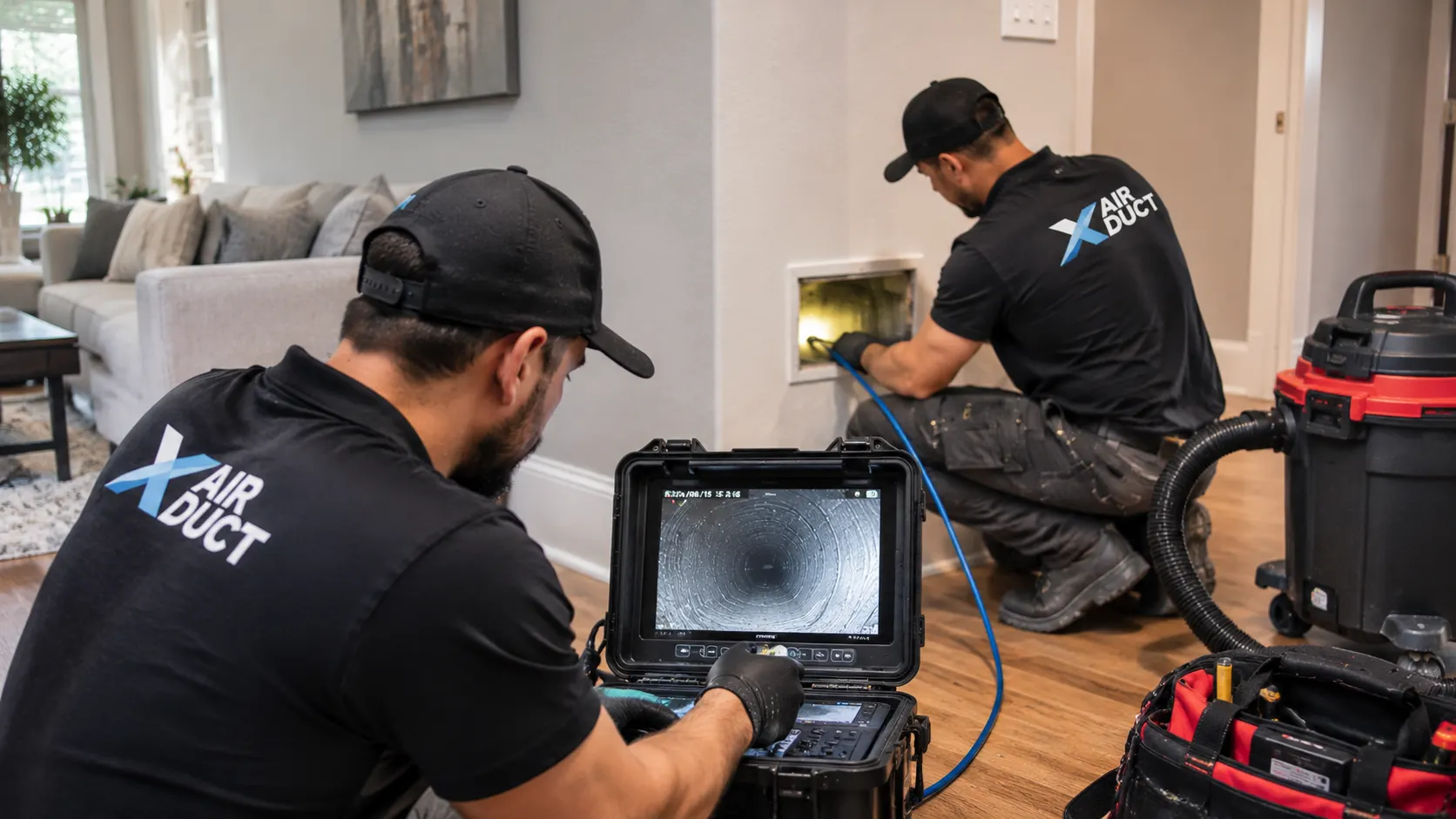
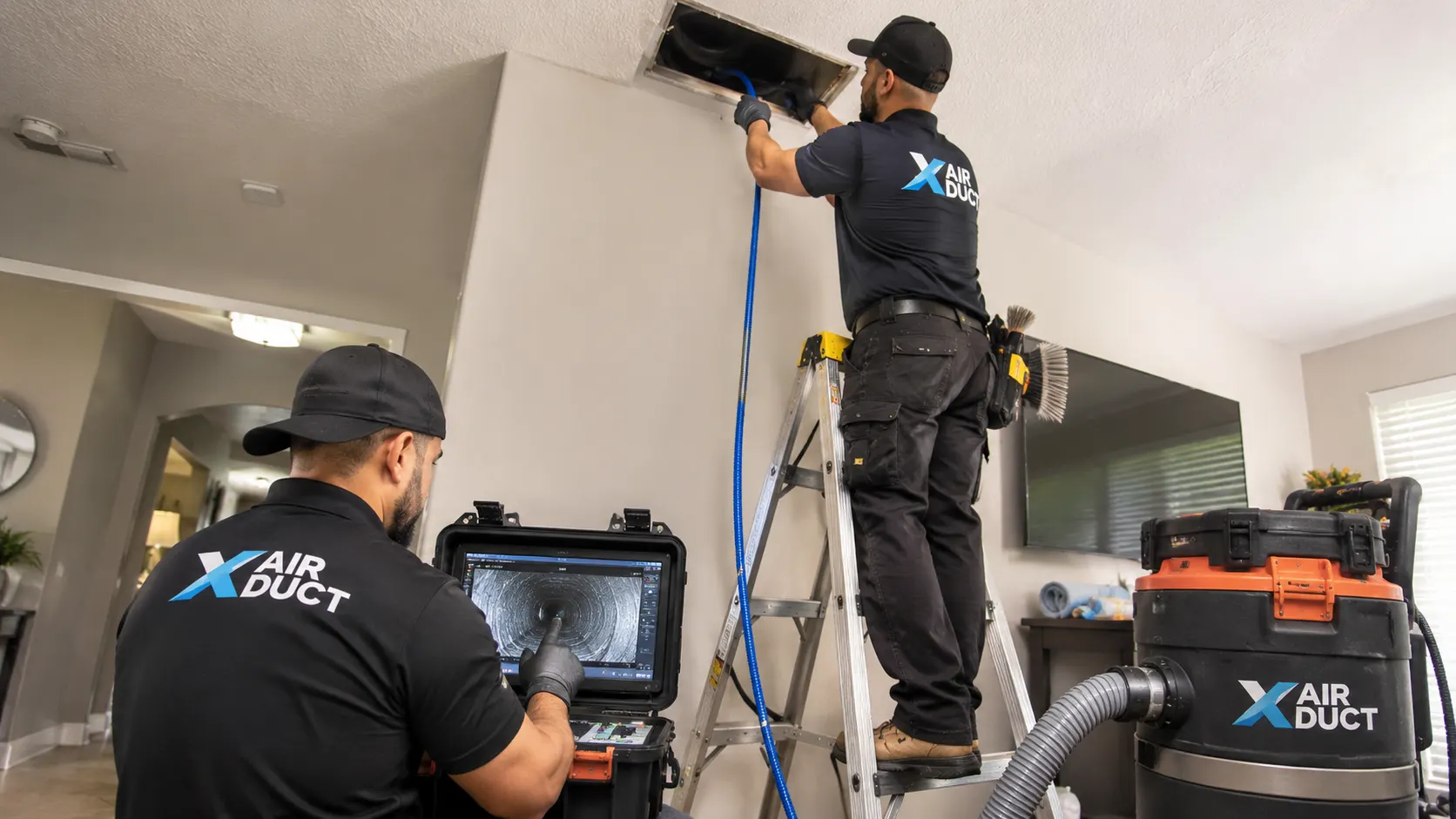
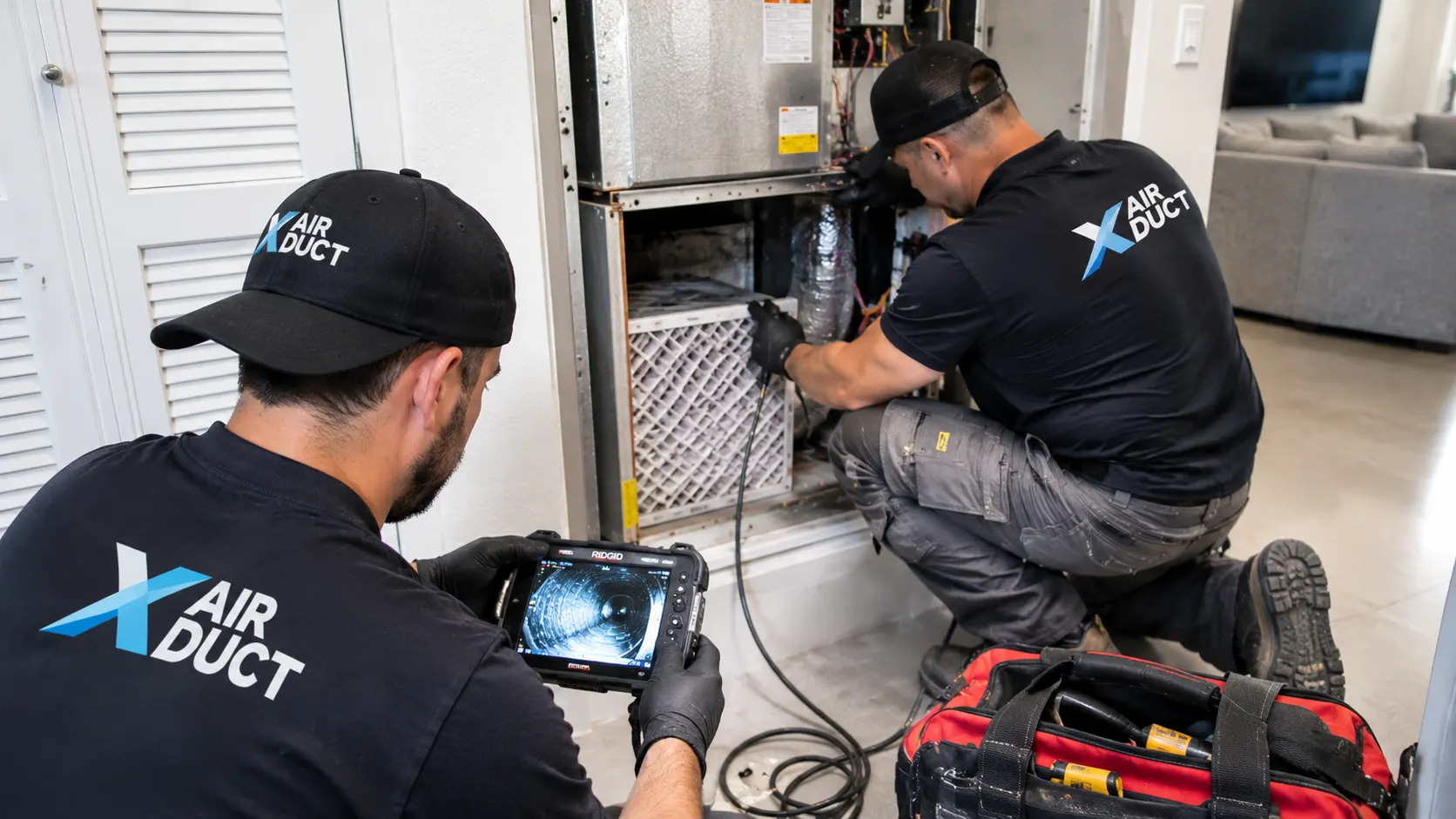
Registers, returns, the air handler area, and dryer vent paths are examined, often with a camera, to decide whether cleaning is warranted.
- Stage 03
Equipment and work-area preparation
Floors and furnishings along the work path are protected, the system is switched off, and hoses are routed safely.
- Stage 04
Appropriate professional cleaning
Negative-pressure collection paired with agitation tools suited to the duct or vent material.
- Stage 05
Final inspection and explanation
We review what was cleaned, what could not be reached, and anything that belongs to another trade.
- Stage 06
Maintenance recommendations
Filter habits, humidity awareness, and a sensible re-check window for your specific property.
South Florida property considerations
Ventilation in a place where the AC never really rests
Year-round cooling demand
Air conditioning runs most of the year, so filters load faster and condensate drains do constant work. Monthly filter checks matter more here than in milder climates.
Warm, humid weather
The EPA recommends indoor humidity below 60 percent, ideally 30 to 50. Leaks, short-cycling equipment, and blocked drains undermine that. Duct cleaning does not control humidity.
Condo and apartment ventilation
Closet air handlers, ducts concealed in soffits, and association rules shape what can be reached and when work can happen.
Dryer vent routing
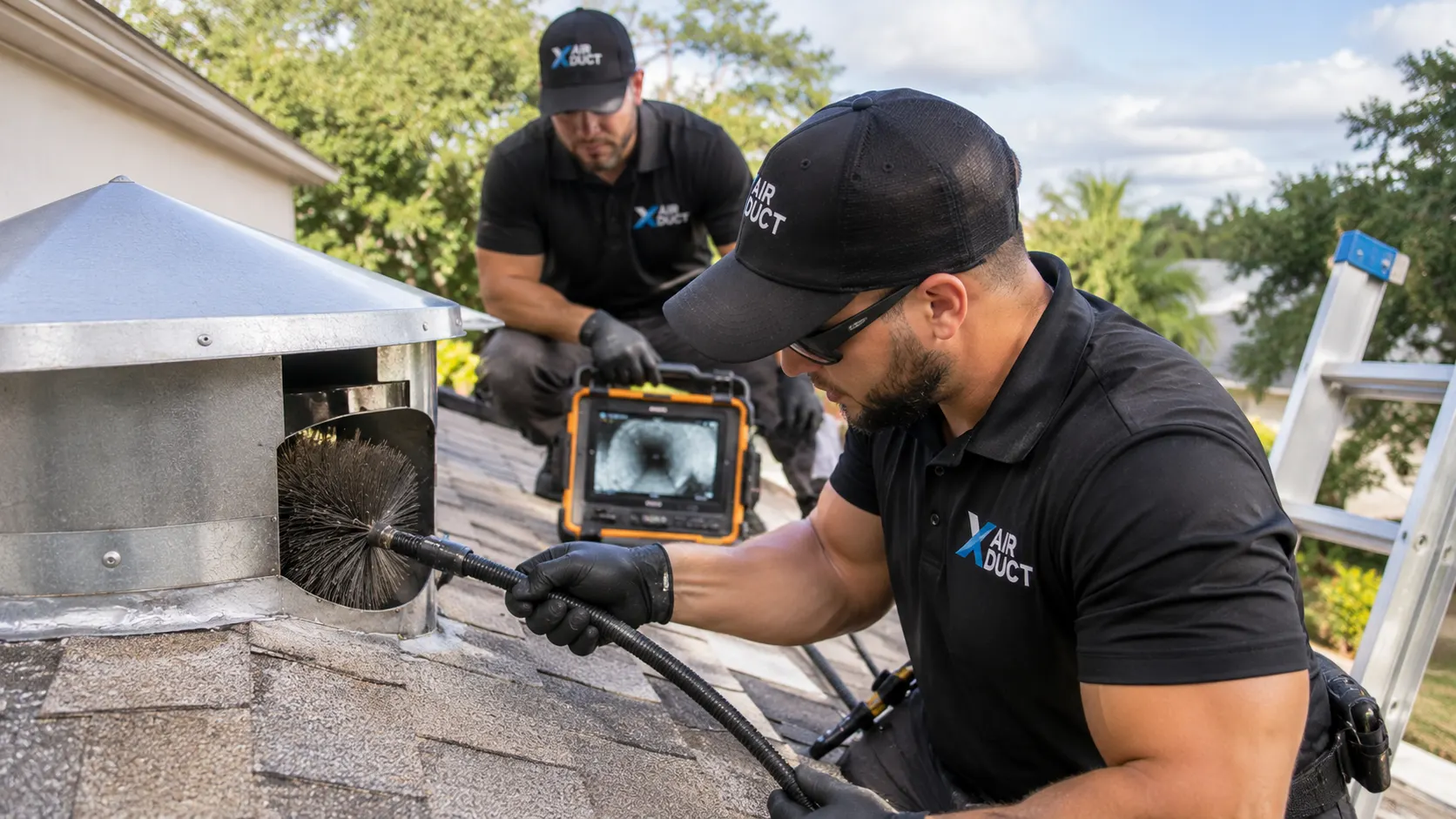
Block-wall exits, garage ceilings, roof caps, and building chases are all common. The route determines how a vent should be maintained.
Coastal and outdoor air
Salt air ages exterior vent hardware; construction and wind bring dust indoors. Well-seated filters and sealed returns are the first defense.
Commercial requirements
Offices, retail, and managed buildings need work coordinated around occupants, hours, and above-ceiling access.
Managing moisture comes first. Duct cleaning alone does not solve humidity or mold problems. If moisture is present, the source must be found and corrected, and wet or moldy insulation may need replacement rather than cleaning.
Residential solutions
For houses, townhomes, and condominiums
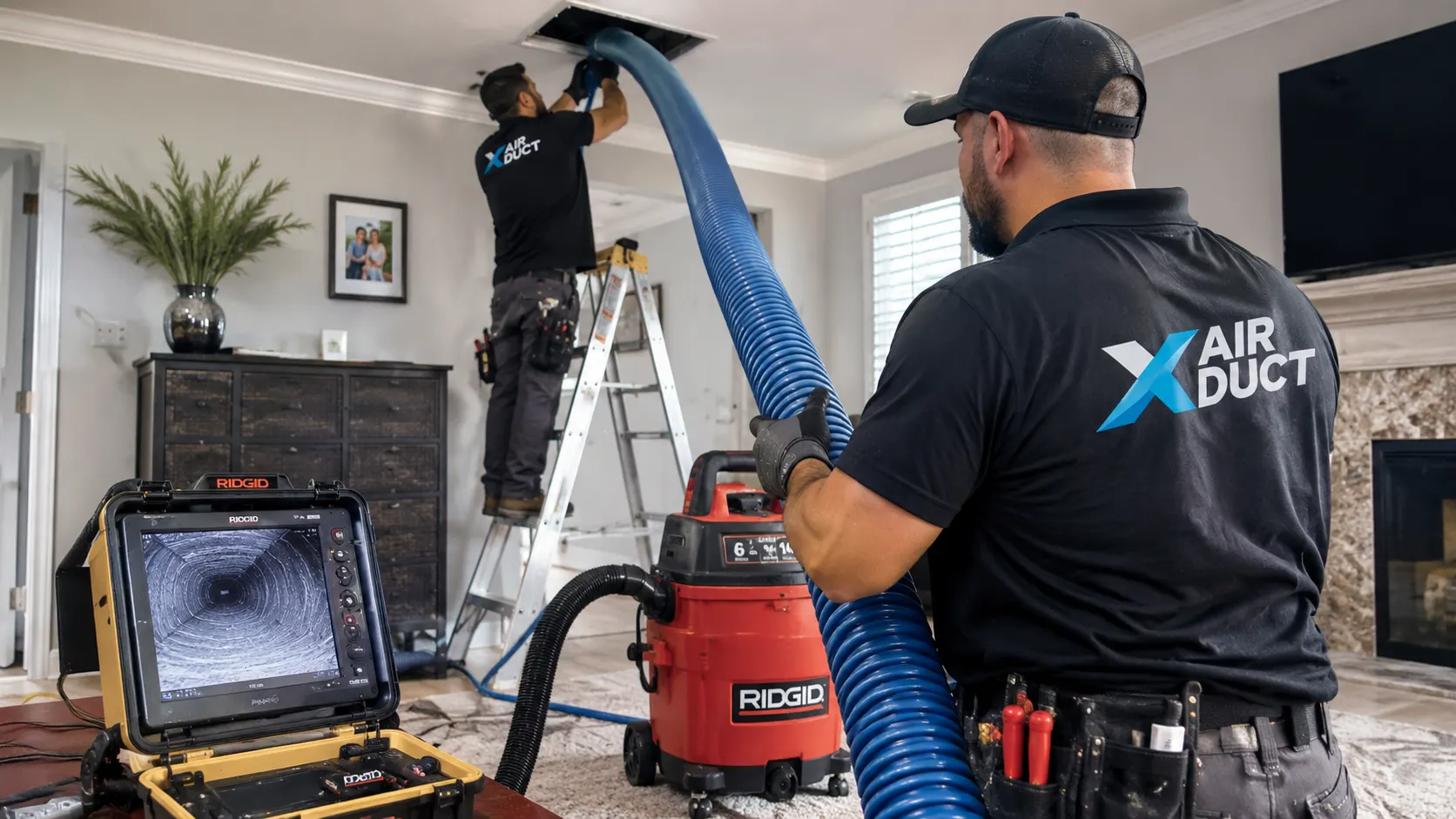
A home is not a job site. We plan around pets, furniture, work-from-home schedules, and the particular layout of your house or condo, keeping equipment to a defined path and protecting the surfaces along it.
Single-family homes usually give direct access to the system. Condominiums often involve concealed ducts, association approvals, and dryer exhaust that joins a building chase. We clarify those boundaries before anything is scheduled.
Commercial solutions
For offices, retail, and managed properties
Commercial ventilation work is coordination first. We define scope with the owner or manager zone by zone, plan around occupants and business hours, and follow building rules for access, insurance, and elevators.
Afterward you receive a clear summary of what was cleaned, what was inaccessible, and any observations that should go to the building HVAC contractor.
Our technicians
Hands on the work, not posing for the camera
What you can expect from the people who come to your property.
Preparation
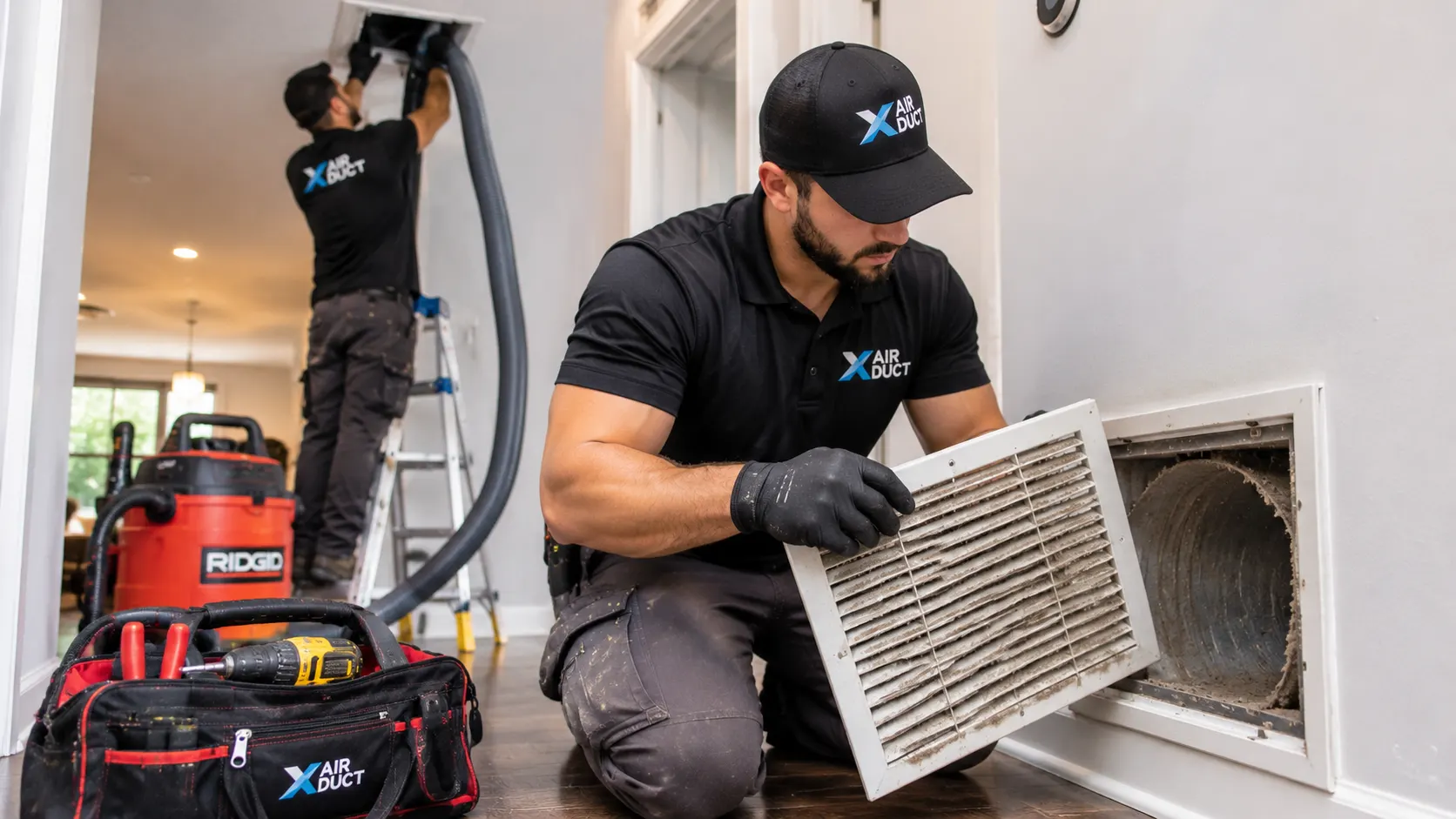
Arrive knowing what you told us: system type, access, building rules, and concerns. Protection goes down before tools come out.
Communication
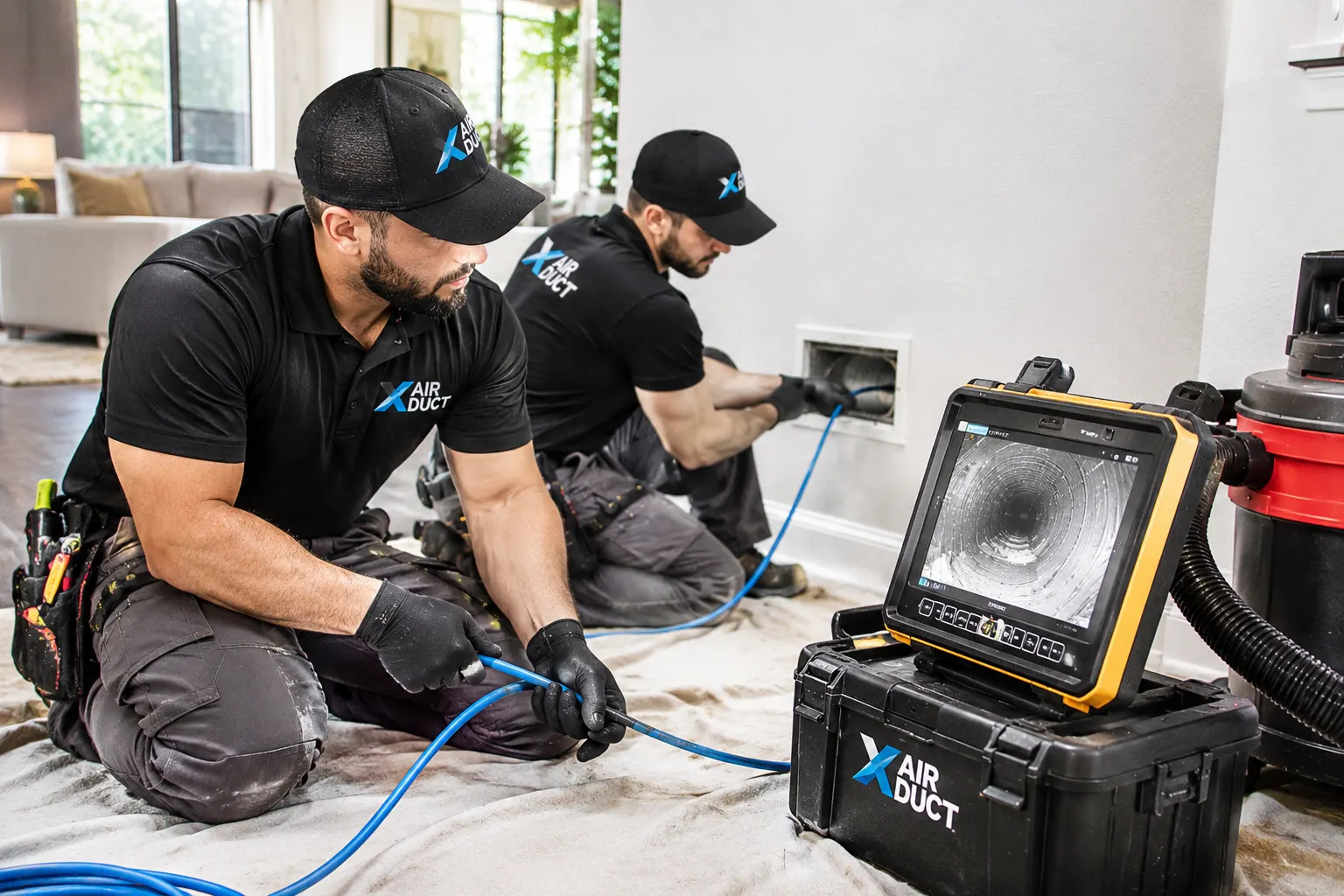
Explain what we see as we go, invite you to watch the camera feed, and summarize findings at the end in plain language.
Safe working practices
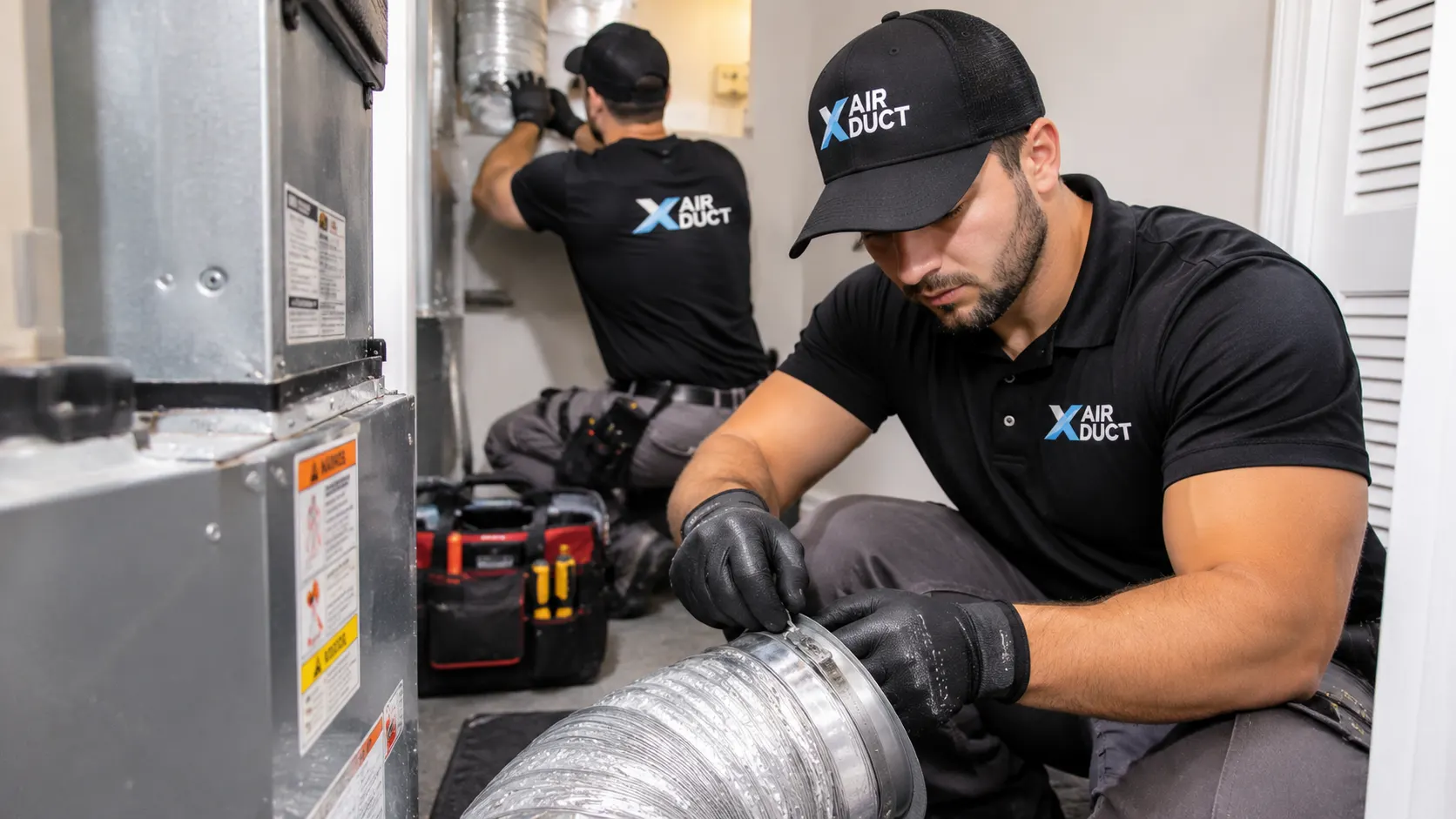
System off during work, ladders and hoses never left in walkways, care with gas dryer connections, and no rooftop access unless it is safe.
Photography is illustrative of the type of work we perform. It does not depict specific completed jobs or named employees.
More about how we workDryer vent safety and airflow
Four different jobs that often get lumped together
Lint removal, airflow maintenance, inspection, and repair each solve a different problem. Knowing which one you need saves time and money.
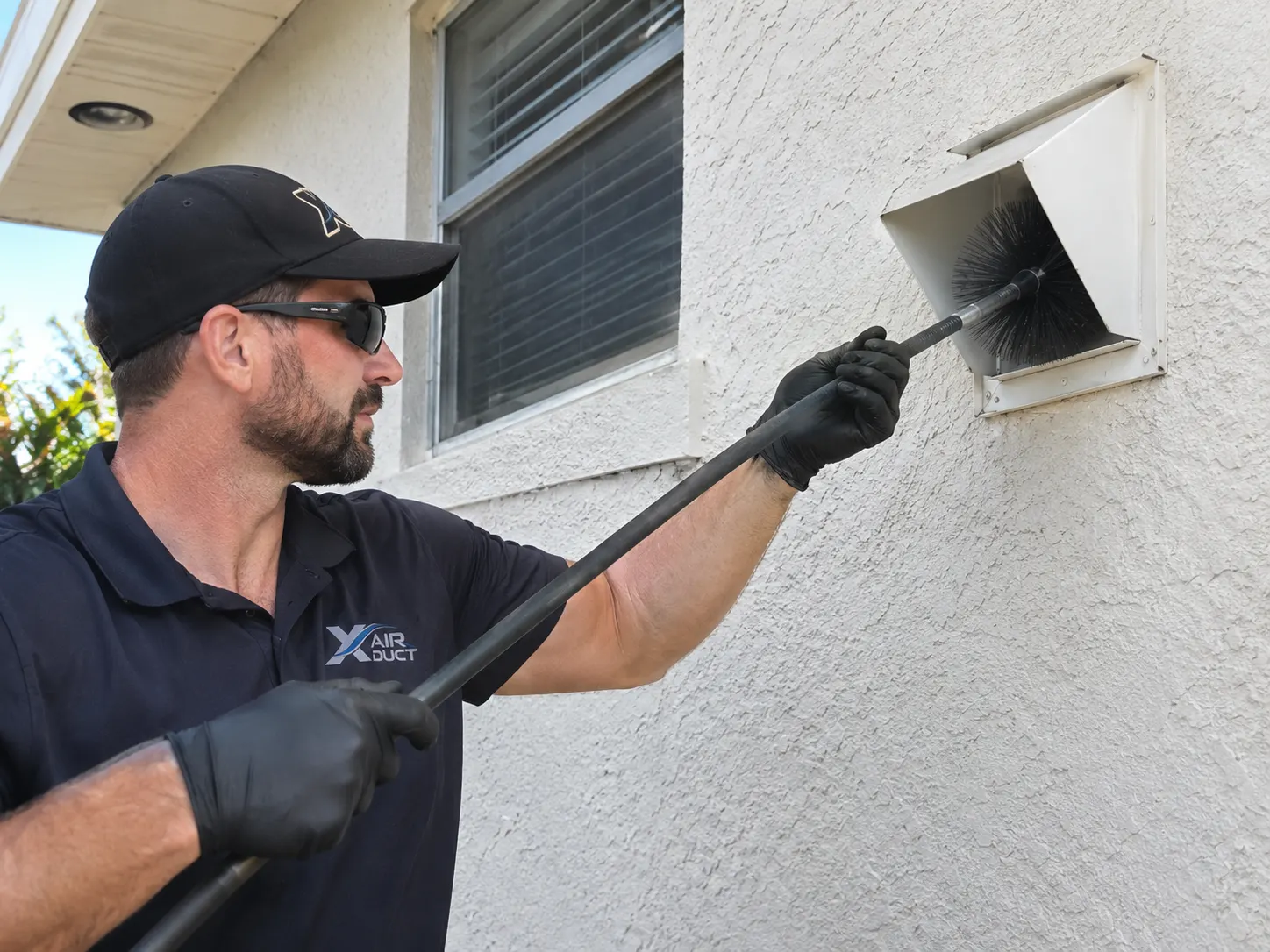
Lint removal
Homeowner, every loadClean the lint screen before or after every load. This is the single most important dryer habit, recommended by the U.S. Fire Administration.
Airflow maintenance
Homeowner, periodicallyKeep the transition hose uncrushed, keep the area behind the dryer clear, and check that the exterior flap opens while the dryer runs.
Inspection
Professional, as neededTrace the route, view concealed sections with a camera, and check the termination. Useful after installation, when moving in, or when drying slows.
Cleaning
Professional, based on useRemove lint from the full run with rotary tools and collection equipment.
Repair
Qualified installerCrushed, disconnected, or improperly routed vents need correction. X Air Duct does not offer repair; we will explain what we observe.
Local service coverage
57 cities across three South Florida counties
Search for your city, filter by county, or start with a county overview.
Broward County
From Hollywood and Fort Lauderdale to Parkland and Weston.
Miami-Dade County
From Aventura and Miami Beach to Kendall and Homestead.
Palm Beach County
From Boca Raton and Delray Beach to Jupiter and Wellington.
57 cities
- Hollywood, FLBroward County
- Fort Lauderdale, FLBroward County
- Dania Beach, FLBroward County
- Hallandale Beach, FLBroward County
- Pembroke Pines, FLBroward County
- Miramar, FLBroward County
- Davie, FLBroward County
- Plantation, FLBroward County
- Pompano Beach, FLBroward County
- Deerfield Beach, FLBroward County
- Coral Springs, FLBroward County
- Coconut Creek, FLBroward County
- Weston, FLBroward County
- Sunrise, FLBroward County
- Tamarac, FLBroward County
- Cooper City, FLBroward County
- Margate, FLBroward County
- Lauderdale Lakes, FLBroward County
- Lauderhill, FLBroward County
- Oakland Park, FLBroward County
- Wilton Manors, FLBroward County
- North Lauderdale, FLBroward County
- Parkland, FLBroward County
- Lighthouse Point, FLBroward County
- Miami, FLMiami-Dade County
- Miami Beach, FLMiami-Dade County
- North Miami, FLMiami-Dade County
- North Miami Beach, FLMiami-Dade County
- Aventura, FLMiami-Dade County
- Sunny Isles Beach, FLMiami-Dade County
- Miami Gardens, FLMiami-Dade County
- Hialeah, FLMiami-Dade County
- Doral, FLMiami-Dade County
- Miami Lakes, FLMiami-Dade County
- Coral Gables, FLMiami-Dade County
- Kendall, FLMiami-Dade County
- Homestead, FLMiami-Dade County
- Cutler Bay, FLMiami-Dade County
- Palmetto Bay, FLMiami-Dade County
- Pinecrest, FLMiami-Dade County
- South Miami, FLMiami-Dade County
- Miami Springs, FLMiami-Dade County
- Surfside, FLMiami-Dade County
- Bal Harbour, FLMiami-Dade County
- Boca Raton, FLPalm Beach County
- Delray Beach, FLPalm Beach County
- Boynton Beach, FLPalm Beach County
- Lake Worth Beach, FLPalm Beach County
- West Palm Beach, FLPalm Beach County
- Palm Beach Gardens, FLPalm Beach County
- Jupiter, FLPalm Beach County
- Wellington, FLPalm Beach County
- Royal Palm Beach, FLPalm Beach County
- Greenacres, FLPalm Beach County
- Riviera Beach, FLPalm Beach County
- Lantana, FLPalm Beach County
- North Palm Beach, FLPalm Beach County
Professional equipment
The tools of the trade, and why tool choice matters
These are the categories of equipment used in professional duct and dryer vent work. We will tell you exactly what we plan to use on your system before we start.
01
Negative-pressure collection
Units that hold the duct system under suction so loosened debris travels to a filtered collector, not into the room.
02
Agitation tools
Rotary brushes and air tools sized to the duct. Sheet metal tolerates firmer tools; flexible duct needs gentler ones.
03
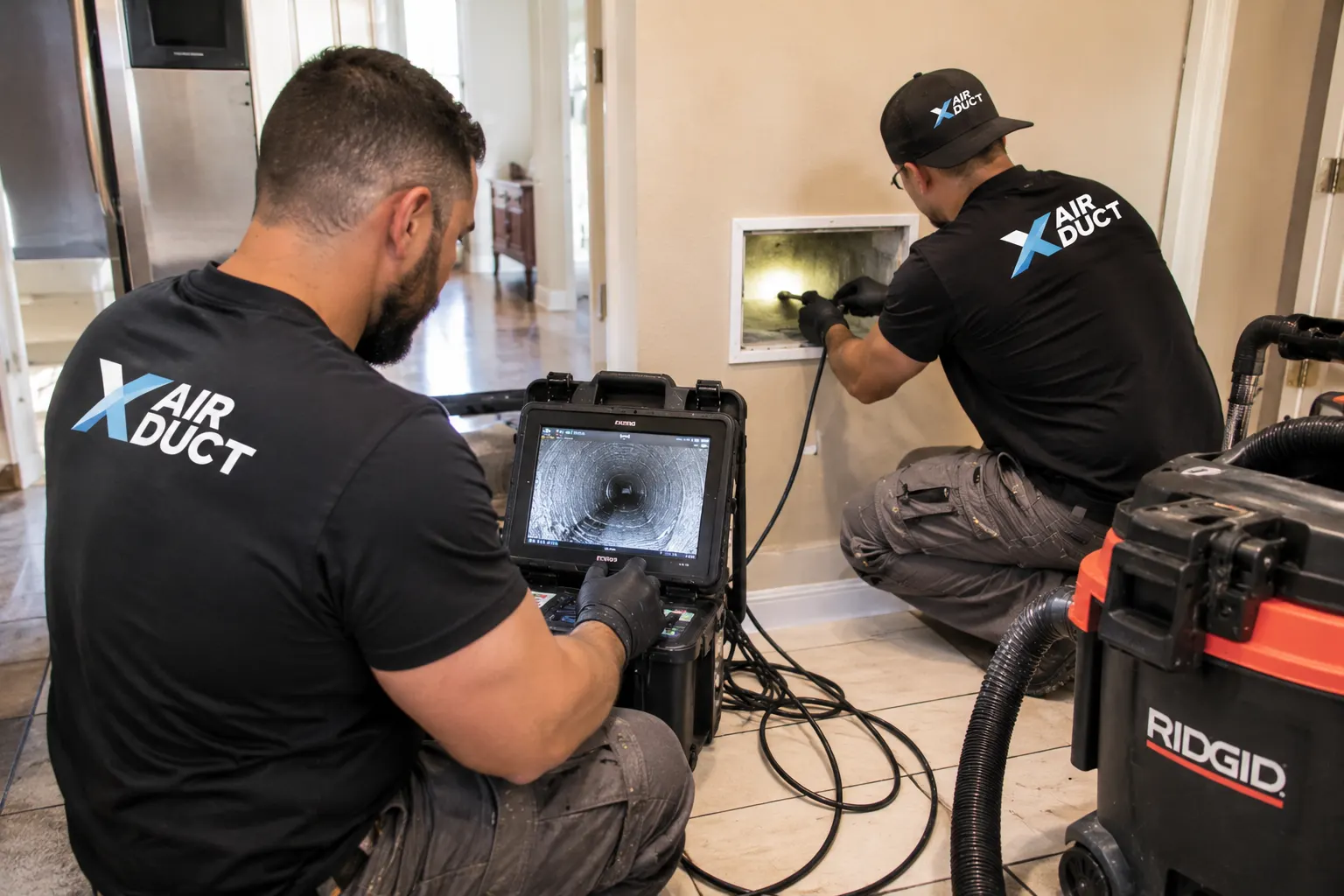
Inspection cameras
Push-cable cameras with monitors so you can see inside your ducts and dryer vent before and after work.
04
Dryer vent rod systems
Flexible rotary rods that travel the vent run from the laundry area to the exterior termination.
Straight talk
What duct cleaning will not do
Clear limits are part of making a good decision.
- It is not a proven way to prevent health problems, according to the EPA.
- It does not fix humidity, condensation, or leaks.
- It cannot guarantee a dust-free home.
- It does not replace filter changes or HVAC equipment maintenance by a licensed contractor.
- It does not repair damaged ducts or dryer vents.
Complete guides
Six guides that answer the bigger questions
The Complete Guide to Air Duct Cleaning
Duct systems, dust, methods, inspection, cost factors, and limits.
GUIDE 02The Complete Guide to Dryer Vent Cleaning
Lint, routing, blockage symptoms, inspection, and maintenance.
GUIDE 03Airflow and HVAC Ventilation
Weak airflow causes: filters, ducts, registers, fans, and maintenance.
GUIDE 04South Florida Home Ventilation
Cooling demand, humidity, property types, and maintenance planning.
GUIDE 05Commercial Ventilation Maintenance
Coordination, access, scheduling, and occupant communication.
GUIDE 06Air Duct Cleaning Questions and Professional Advice
A structured Q&A resource with straight answers.
From the resource library
Practical articles for real decisions
Air Ducts · 6 min
How Often Should Air Ducts Be Cleaned?
There is no single interval that fits every home. The EPA recommends cleaning air ducts as needed: when there is substantial visible buildup inside the ducts, debris discharging from supply registers, evidence of pests, or contamination such as renovation dust. Many homes go years without needing it.
Dryer Vents · 5 min
Signs of a Restricted Dryer Vent
The most common signs are longer drying times, clothes that come out hot but damp, a laundry area that gets unusually warm, a hood flap that does not open fully, lint around the exterior termination, and a burning smell. A burning smell means stop using the dryer until it is checked.
South Florida · 6 min
How Humidity Affects Indoor Ventilation
Air conditioning removes moisture as it cools. When indoor humidity remains high, condensation can form on cold surfaces such as supply registers and ducts in unconditioned spaces. The EPA recommends indoor humidity below 60 percent, ideally 30 to 50 percent, and emphasizes that controlling moisture is the key to controlling mold.
Homeowner questions
Answers before you ask
Short, direct answers with links to the detailed guides.
01What is included in professional air duct cleaning?
A thorough job addresses the accessible supply ducts, return ducts, registers, and grilles, along with the areas near the air handler where debris tends to collect. Debris is loosened with brushes or air tools and captured by collection equipment under negative pressure. Scope varies by system and access, so a reputable company should define exactly which components are included before work begins.
Air duct cleaning service details02Do air filters replace the need for duct cleaning?
Filters and duct cleaning do different jobs. A properly fitted filter, changed on schedule, reduces how much dust reaches the system and is the single most useful maintenance habit. It does not remove debris that is already in the ducts, and it cannot catch dust that enters through gaps or leaks. Good filter habits often mean cleaning is needed less often.
Air duct cleaning vs. HVAC maintenance03What are the warning signs of restricted dryer exhaust?
Longer drying times, clothes that are hot but damp, a hot laundry room, a hood flap that barely opens, lint around the exterior termination, or a burning smell. If you notice a burning smell, stop using the dryer until it is checked.
Signs of a restricted dryer vent04Can duct cleaning remove all mold?
No contractor should promise that. The EPA explains that mold is controlled by controlling moisture, and that if ducts are wet or contain moldy insulation, the moisture source must be fixed and insulation may need to be replaced rather than cleaned. Suspected mold should be evaluated appropriately before any cleaning decision.
How humidity affects indoor ventilation05Are condo ventilation systems different from single-family systems?
Often yes. Condo air handlers are commonly in closets, ducts run above dropped ceilings, and dryers may exhaust into building chases. Associations may control access, hours, and contractors. Check your rules before scheduling.
Ventilation considerations for Miami condominiums06What affects the cost of air duct cleaning?
The number of systems, registers, and returns, duct type, access difficulty, building rules, and whether inspection or dryer vent work is included. Be cautious of very low advertised prices that grow once a technician arrives. X Air Duct discusses scope before quoting and does not publish flat prices because properties differ.
How to reach us
Share details
Use the estimate request to prepare an email with your service, location, property type, and a description.
We reply by email
We respond from info@xairduct.com to discuss scope, access, and next steps.
Plan the visit
Together we confirm what will be inspected or cleaned and what to prepare beforehand.
Next step
Ready to Take Better Care of Your Ventilation System?
Contact X Air Duct to discuss your air duct or dryer vent cleaning needs. Share a few details about your property, and our team can help you understand the available next steps.